

Bluebook Weekly
Your trusted source for college recruiting, player development, and everything in between.
In This Issue
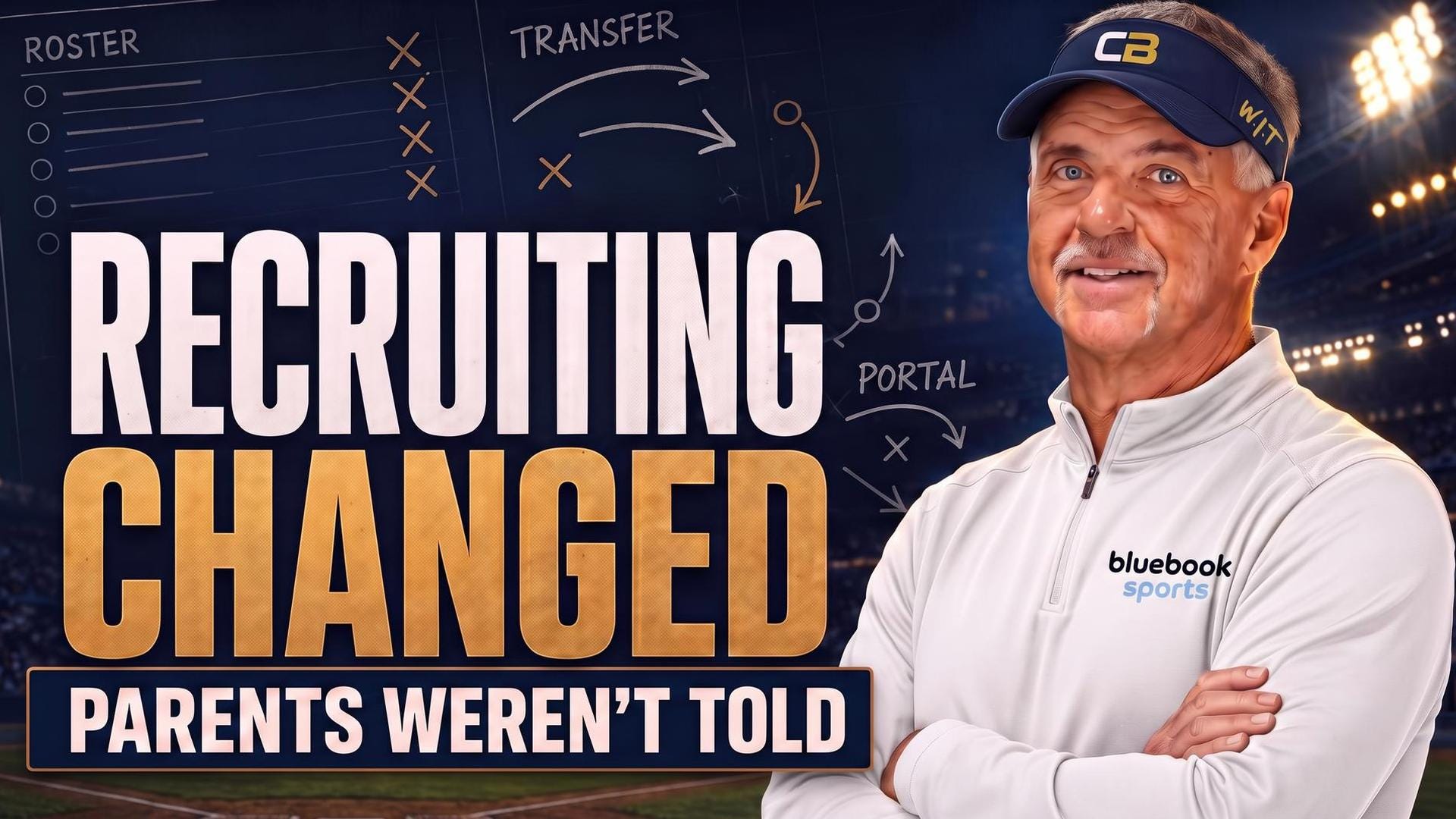
Why the recruiting calendar has shifted to junior and senior year, and what that means for your family
The roster math and 5-for-5 fallout behind the shift, including a fresh court ruling reshaping rosters this week
Coaches Corner Podcast: Travis Creel, new head coach at Jacksonville State, on his high-school-heavy recruiting model
The Process: a parent recruiting report card to grade yourself against
. . . what used to work will never work again.
The model is different now, and almost nobody has explained that to families clearly. So let's fix that.
The story you were told is dead. For years, parents were told that exposure, showcases, and camp invites mattered starting in middle school. That story is officially over. College coaches aren’t hunting freshmen and sophomores anymore. They trust their own networks, former players, former coaches, people who can actually evaluate talent, and those contacts feed them names. Real recruiting attention now clusters around the junior year and doesn’t get serious until senior fall.
August 1 is a starting line, not a finish line. That’s the date college coaches can legally begin contacting rising juniors. It’s not a bell that rings and changes everything overnight. Plenty of families were disappointed last year when the phone didn’t blow up on August 1, and this year, with roster math getting tighter, that will happen to even more families. It doesn’t mean your athlete isn’t good enough. It means the calendar moved.
Why the calendar moved: roster math. Division I baseball is capped at 34 roster spots, and there’s no more red-shirting, no walk-on stashing, nowhere to hide a player. That’s roughly 12,400 total Division I roster spots nationally, and coaches are filling them with portal transfers first, because a college arm or bat is a known, provable commodity. High school recruiting gets pushed to whatever’s left.
The 5-for-5 rule is the piece making all of this worse. Under the new eligibility model, athletes get five seasons within a five-year window, with no more redshirt years to plan around. That means coaches can now hold onto experienced players an extra season instead of turning the roster over, so programs that used to graduate seven or eight players and sign ten to twelve freshmen a year are shrinking that incoming class down to four or five spots. It has already triggered a wave of decommitments nationally, concentrated in the high school class of 2027, as some programs that extended offers early had to walk them back once older players chose to stay. And the picture is still moving. Just this past weekend, a federal court in Colorado granted an injunction giving an entire group of athletes, the high school class of 2022, an extra year of eligibility they weren’t originally going to get, on top of everything else. Rosters everywhere are being rebuilt in real time. NCAA Division II has now recommended its own version of the five-year model starting this fall too, which means the roster squeeze that’s hitting Division I is about to hit Division II families as well.
More showcases is not a strategy. Unless a head coach who’s genuinely interested in your athlete is confirmed to be attending, stacking showcase after showcase doesn’t create opportunity. It creates cost. The families winning this process are choosing events, not chasing them.
Division III is quietly becoming a new path. With the eligibility clock changing, a strong two years at a Division III program followed by a real statistical record can now open the door to three more years at the Division II or Division I level, similar to how JUCO has always worked. Don’t let anyone tell you Division III can’t be a launching pad, or that the division doesn’t have real money on the table. Merit aid, academic aid, and grant money are very real at that level.
What to actually do this week:
Log real numbers, not hoped-for numbers. A 6.9 sixty isn’t a 6.7. Round nothing.
Build a visible progression over time. Coaches want to see growth, not a single showcase moment.
If your athlete is under 16, the job isn’t exposure. It’s strength, speed, and skill development. Full stop.
If you’re emailing coaches once you’re eligible to, keep it personal, state the fit clearly in the first few sentences, and include real video.
The runway is longer than it feels right now. Roster spots open every spring. The question isn’t whether your athlete is as good as the high school kid down the road. It’s whether they’re ready to compete with the college sophomore who’ll still be on that roster when your athlete arrives.

The Recruiting Advice Every 2027 & 2028 Family Needs: Travis Creel, Head Coach at Jacksonville State

Coaches Corner Podcast | Sponsored Bluebook Sports App
Travis Creel just stepped into his first head coaching job after years as a top assistant at Southern Miss and Louisiana Tech, and he’s building Jacksonville State around a philosophy a lot of overlooked players should pay attention to: high school heavy, developed in-house, retained long term.
On what he’s actually recruiting for: “We want to recruit that overlooked high school kid... get them in the building early, let them play early, and develop and retain them. That’s the goal.” Creel isn’t chasing the loudest name in the portal. He wants players his staff can build a real relationship with over four years.
On what separates a good 15 and 16 year old from an elite one: two things, in his words. The weight room, because strength is the clearest early separator scouts can actually see. And the way a player competes when no one’s grading them for it, hustle down the line, body language, how locked in they are between pitches. “We want winners. We want guys who know how to play winning baseball.”
On what’s coming for roster classes: Creel confirmed what the numbers already show. With Division I settling at a true 34-man roster and five years of eligibility becoming standard, “the recruiting classes are going to get smaller. There’s just no other option.” His read: better high school players will start landing at mid-major programs, because there’s simply less room everywhere else.
On how to actually get on his radar: Skip the copy-paste oa Ai generated email (coaches can tell). Creel wants a personal note: name, age, hometown, what you do well, and real video attached. And camps still matter, not as a money grab but as the one setting where a coaching staff gets to shake a kid’s hand and see who they’re really recruiting.

Grading Yourself as a Recruiting Parent
The Process Podcast | Presented by CorVive
Communication. Somewhere around 16, the job shifts from advocating for your athlete to teaching them to advocate for themselves. Coaches want to hear from the player, not the parent.
Expectations. Nothing that happens at 12 or 14 matters at 17. Athletic development is a body of work that culminates junior and senior year, the same way twelve years of school culminate in a diploma. Chasing a stat line at a youth tournament is chasing something that won’t exist by the time it counts.
Support, not management. The years you have your child at home make up roughly 90 percent of the total time you’ll ever spend with them. Once they leave for college, that’s it. Spend it being present, not managing their career.
Letting them fail. A strikeout, an error, getting cut from a team, none of it needs a parent to soften it or explain it away. Beede’s own father’s rule was simple: pass or play. It’s on the athlete to decide how badly they want it, and that decision only means something if it’s actually theirs.
Time management over more lessons. The families gaining real separation aren’t the ones stacking more instructors. They’re the ones getting an extra hour of sleep, prepping real meals, and putting in unglamorous reps nobody’s watching. As Beede put it, quoting Ted Williams: it’s never the arrow, it’s always the Indian.


The App for Sports Parents
Recruiting timelines. Development decisions. College fit. There’s a lot to navigate - and most parents are figuring it out on the fly.
Bluebook Sports gives you and your athlete the tools to build a standout profile, connect with coaches, and find the right college fit - all in one free app. Stay ahead of the process with the resources, network, and insights you need to help your athlete succeed.
Download Bluebook Sports Free - Are You in the Books?
Download For Fre
This is why we think parents have to be so careful about optimizing a 12- or 13-year-old's path for what recruiting supposedly requires years from now. The landscape will keep changing. Developing the player and the person travels a lot better than trying to predict the system.